relationships
How to apologize to your partner after a fight
Winning the argument rarely feels like winning. Here is how to say sorry so the two of you end up on the same side again.

In this article
Quick answer
To apologize to your partner after a fight, wait until you are both calm, then say plainly what you did ("I raised my voice and said you never help"), say sorry with no "but", show you understand how it felt for them, and say what you will do differently. Then stop talking and listen. Short, specific and honest beats long and clever.
Most fights between partners are not really about the dishes or the late reply. They are about feeling unheard. That is why the apology matters more than who was right about the dishes.
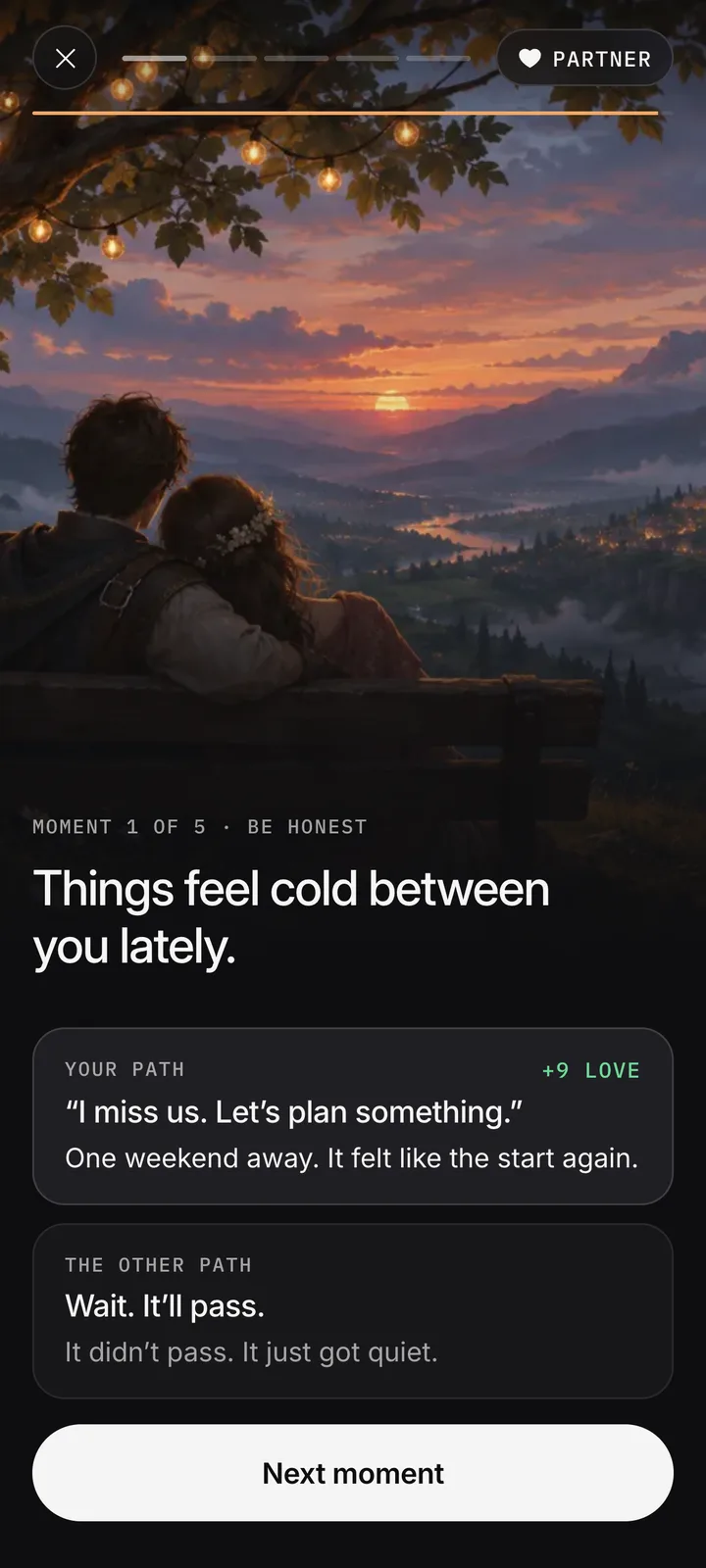
In Two Paths, our life choices game, one of the partner moments is simply: "You're wrong in the fight and you know it." You get two answers and twelve seconds. One is "Keep arguing to win." The game's line for that path: "You win the fight. You lose a little trust." The other is "You're right. I'm sorry." Its line: "The fight ends in ten seconds." This guide is about getting to that second answer in real life, even when your pride is shouting the first one.
Why saying sorry feels so hard
In the middle of a fight, admitting you were wrong can feel like losing. Your brain is busy defending you, not listening. So people hold out, wait for the other person to go first, or offer a half-apology that keeps a little ground.
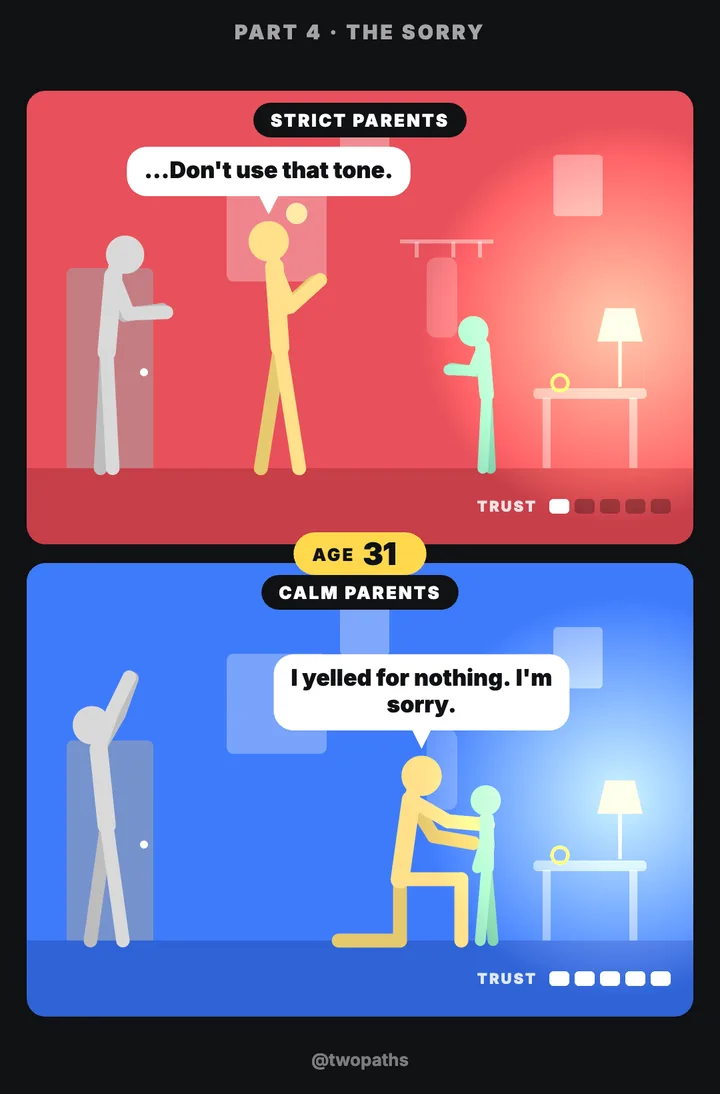
A useful way to see it: the fight is you against each other, and the apology is the moment you switch back to being a team. You are not handing your partner a win. You are ending a game neither of you wanted to play.
How to apologize to your partner after a fight: 7 steps
- Cool down, but not for days. An apology in a raised voice sounds like round two. Take a walk, drink some water, give it an hour or an evening if you need it. Then come back. Letting it slide into a silent week is its own kind of fight.
- Choose the moment. Not while they are rushing out the door, not in front of friends, not by shouting from another room. Ask, "Can we talk about earlier?" and sit down together.
- Name exactly what you did. "I said you never help with anything. That wasn't true." Specific shows you understood. "Sorry about all that" makes them guess which part you mean.
- Say sorry with no "but". "I'm sorry, but you were yelling too" is a second argument in disguise. Stop after "I'm sorry." If there is something you need to raise about their part, it can wait for another conversation.
- Show you get how it felt. "I think that made you feel like nothing you do counts." You don't have to get it perfectly right. Trying to see it from their side is the point.
- Say what you'll do differently. Keep it small and real: "Next time I feel that heated, I'll say I need ten minutes instead of saying something mean." A promise you can keep is worth more than a big one you can't.
- Listen, and don't rush them. Ask "Is there anything I'm missing?" and then actually wait. They may need time, they may add something you didn't know, or they may just want a hug. Don't ask them to say "it's fine". They don't owe you that on your schedule.
What to say: real words for real fights
The steps stay the same. The words depend on what happened.
When you said something hurtful: "What I said about your family was cruel, and I don't even believe it. I'm sorry. You didn't deserve that."
When you weren't listening: "You were telling me about your awful day and I jumped straight to fixing it. I'm sorry. Can you tell me again? I'll just listen this time." (That one is in the game too. "Jump in with solutions." gets the line "They wanted a hug, not a plan.")
When you both said things: "I can only speak for my part. I got sarcastic and I shut down. I'm sorry for that." Owning your half first often makes it easier for them to own theirs.
Can you apologize by text?
You can start by text, especially if you are apart or things are still tense. A text can open the door: "I've been thinking about earlier. I was wrong about what I said, and I'm sorry. Can we talk tonight?"
What a text is bad at is the full apology. Tone gets lost, long messages read like essays, and your partner can't see your face. Use it to say sorry and ask for a real conversation, then do steps 3 to 7 in person or on a call.
Sorry phrases that backfire
Some apologies quietly start the next fight:
- "I'm sorry, but…" Everything after "but" cancels the sorry.
- "I'm sorry you feel that way." It apologizes for their feelings, not your actions.
- "I'm sorry if I upset you." The "if" suggests maybe you didn't. Drop it.
- "You know I didn't mean it." Maybe true, but it asks them to do the work of forgiving you.
- "Fine, I'm sorry. Happy now?" That's a surrender, not an apology.
- Saying sorry and changing the subject. It tells them you want the feeling gone, not the problem fixed.
If you notice you keep apologizing for the same thing, the words will start to sound empty. That is a sign to look at the pattern, not to find better words. Our guide on how to apologize to your child after yelling has a few ideas for breaking a temper loop (a pause word, fixing the trigger) that work just as well between adults.
What if they're not ready to forgive you?
That's allowed. An apology is something you give, not a deal you close. Say "Okay. I'm here when you want to talk," and then show the change in the next small moments: the next time they vent, the next time you disagree, the next time they're late.
Trust usually comes back in those small moments rather than in one big conversation. That is the idea behind the partner role in Two Paths. Its meter is love, it starts at 50, and every choice moves it. Your title changes with the score, from The Cold One and The Roommate up through The Trying Partner and The Teammate to Their Home.
Practise the hard sentence before you need it
"You're right. I'm sorry." is four words, and somehow one of the hardest sentences to say out loud. It gets easier the more often you've already chosen it, even in a game.
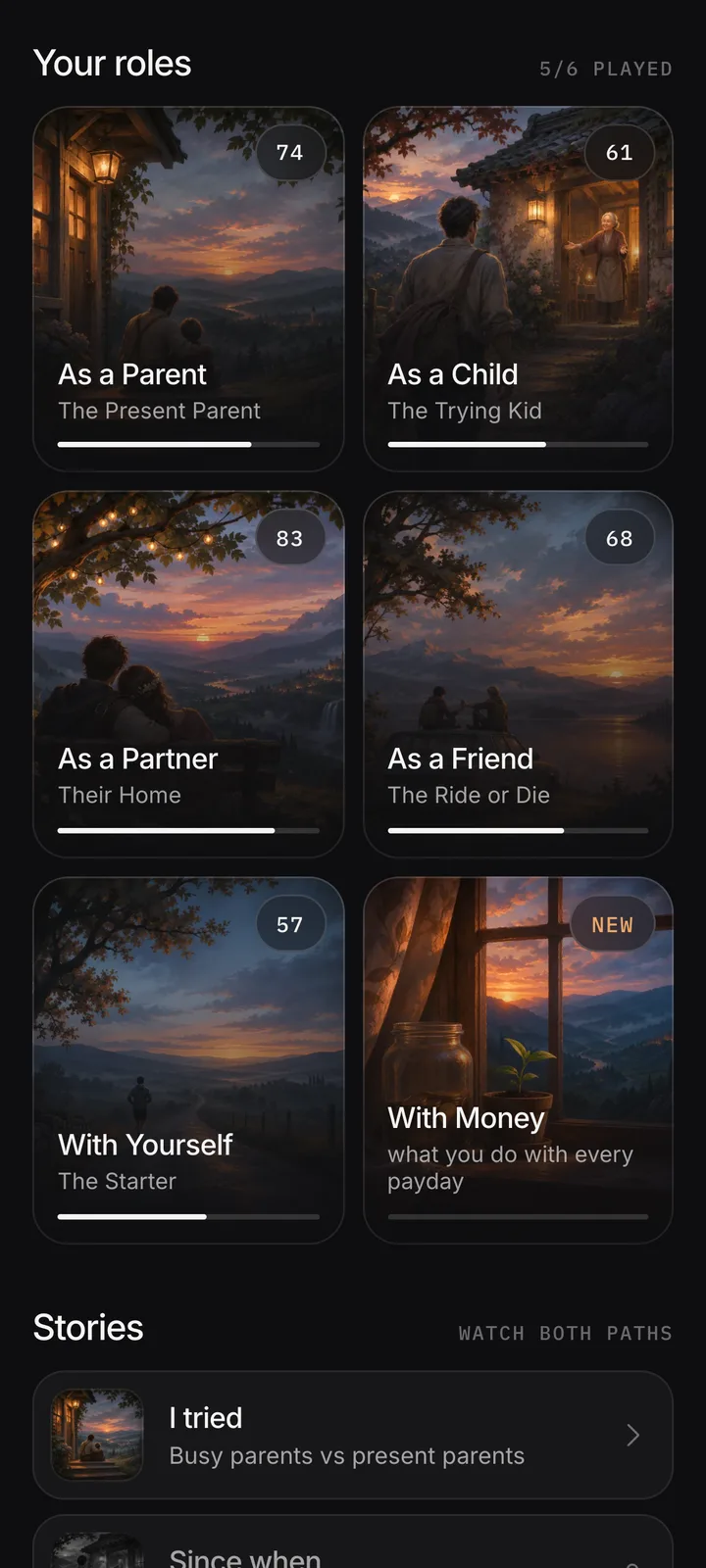
Two Paths gives you a real moment, two honest answers and twelve seconds to pick, then shows your path next to the other path. If you freeze and the timer runs out, you lose 3 points and the game reminds you, "Not choosing is a choice too." In a cold patch with someone you love, that is often true.
Playing a round together and comparing picks is also a gentle way to talk after a rough week. For more conversation starters, try our deep would you rather questions about life, which has a whole section on love and partners. Two Paths is a game built on everyday moments, not relationship counseling, but it's a good place to rehearse the words.
FAQ
Who should apologize first after a fight?
Whoever is ready first. Waiting for the other person to go first usually just makes the silence longer. Apologizing for your part doesn't mean you take the blame for everything; it means you own what you did.
How do I apologize when I'm wrong but still upset?
Separate the two. Say sorry for what you did ("I shouldn't have called you selfish"), and if something still bothers you, raise it later in a calmer, separate conversation, not in the same breath as the apology.
How long should I wait before apologizing?
Long enough to be calm, short enough that it doesn't turn into days of silence. For most fights that means the same evening or the next day. If you need more time, say so: "I need a bit, but I want to talk about this."
Is it okay to apologize to my boyfriend or girlfriend over text?
A text is a fine way to start, especially if you're apart. Use it to say sorry and ask to talk, then have the real conversation in person or on a call, where tone and listening come through.
What if I apologize and they stay angry?
Give them space and don't demand forgiveness. Tell them you're there when they want to talk, then let your next few actions show that you meant it.