parenting
How to apologize to your child after yelling
You lost your temper. Here is how to say sorry so your child learns that grown-ups can fix things too.
In this article
Quick answer
To apologize to your child after yelling, wait until you are calm, go to them, name exactly what you did ("I yelled at you"), say sorry without a "but", and tell them what you will try next time. Then let them answer. A short, honest sorry teaches a child that mistakes can be fixed, including a parent's.
Every parent yells sometimes. Usually it happens at the worst moment: you are tired, late, and the third glass of juice just hit the floor. The yell is not the end of the story, though. What you do in the next hour is what your child remembers longest.
In Two Paths, our life choices game, one of the parent moments is exactly this: "You lost your temper and yelled. It wasn't fair and you know it." One path is to act like it never happened. The game's line for that path is blunt: "They learn grown-ups don't say sorry." The other path is "I was wrong to yell. I'm sorry." Its line: "They learn sorry is strength. One day they'll say it to you." This guide is about taking that second path in real life.
Should parents apologize to their children?
Yes. Saying sorry to your child does not hand over your authority. You can still keep a rule ("we don't throw food") and apologize for how you said it ("I'm sorry I shouted"). The rule and the tone are two different things.
Kids copy what they see far more than what they are told. If you want a child who can say "I was wrong" to a friend, a teacher or, years from now, a partner, they need to watch someone do it first. A calm, short apology is one of the clearest ways to show it. (The same steps work between adults, too: here is how to apologize to your partner after a fight.)
How to apologize to your child after yelling: 6 steps
- Calm down first. An apology in an angry voice sounds like round two. Step away, breathe, drink some water. Ten minutes is fine. Same evening is fine. Just don't let it slide into "never".
- Go to them. Don't shout "sorry!" from the kitchen. Sit next to them or get down to their eye level. Your body says "this matters" before your words do.
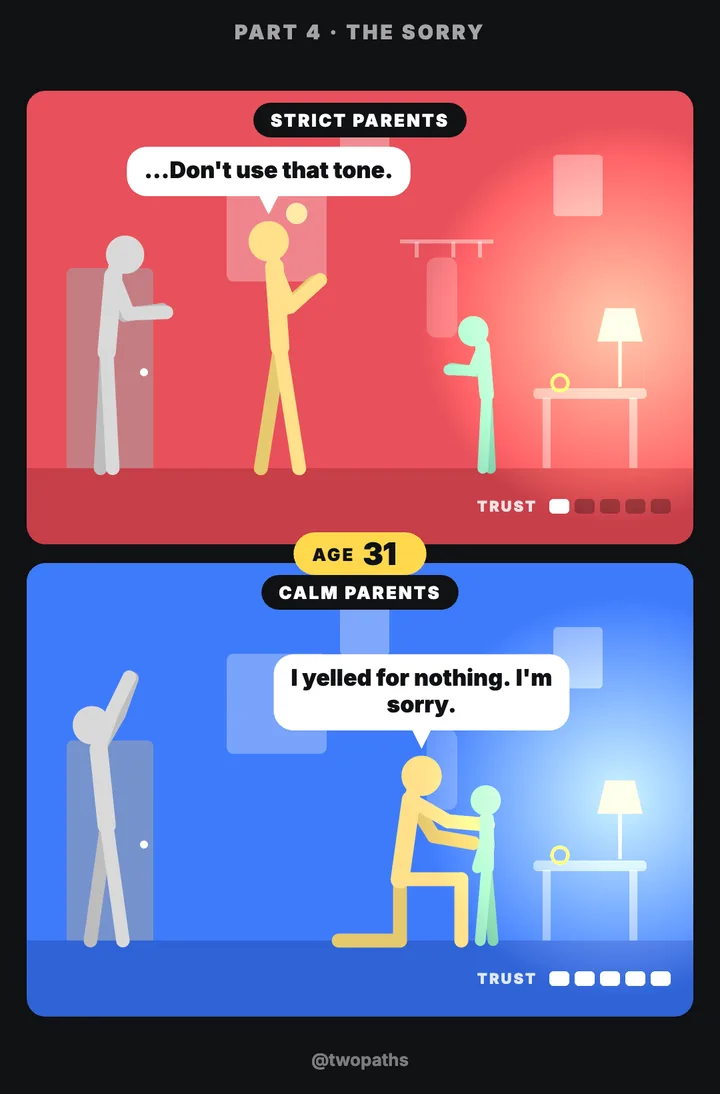
- Name what you did, plainly. "I yelled at you when the juice spilled." Specific beats vague. "Sorry about earlier" leaves a child guessing which part was wrong.
- Say sorry with no "but". "I'm sorry I yelled, but you never listen" is a second telling-off dressed as an apology. Stop after "I'm sorry". If there is a rule to restate, do it later, separately.
- Say what you'll try next time. "Next time I feel that angry, I'm going to take a breath before I talk." Keep it small and real. A huge promise you can't keep teaches the wrong lesson.
- Let them answer. Ask "How did that feel?" or simply wait. They might shrug, cry, or tell you something you didn't know. Whatever comes, listen. Don't ask them to say "it's okay". They don't owe you that.
What to say: scripts by age
The steps stay the same. The words change with age.
Toddlers and preschoolers (2 to 5)
Keep it to one or two sentences and add a hug if they want one. "I yelled. That was scary. I'm sorry. I'm here." Young children mostly need to see that you are calm again and that they are safe with you.
School-age kids (6 to 12)
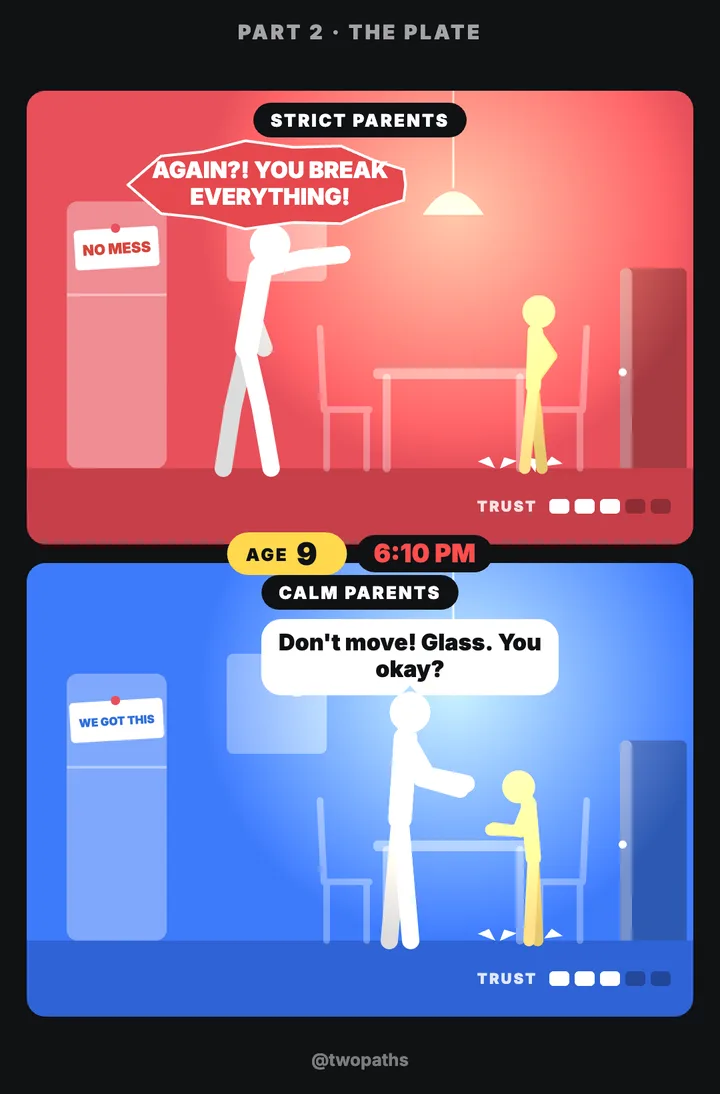
Now you can name the feeling and the fix. "When the plate broke I shouted 'you break everything'. That wasn't true and it wasn't fair. I'm sorry. Next time I'll check you're okay first." At this age kids notice fairness, so admitting what wasn't fair lands well.
Teenagers (13 to 17)
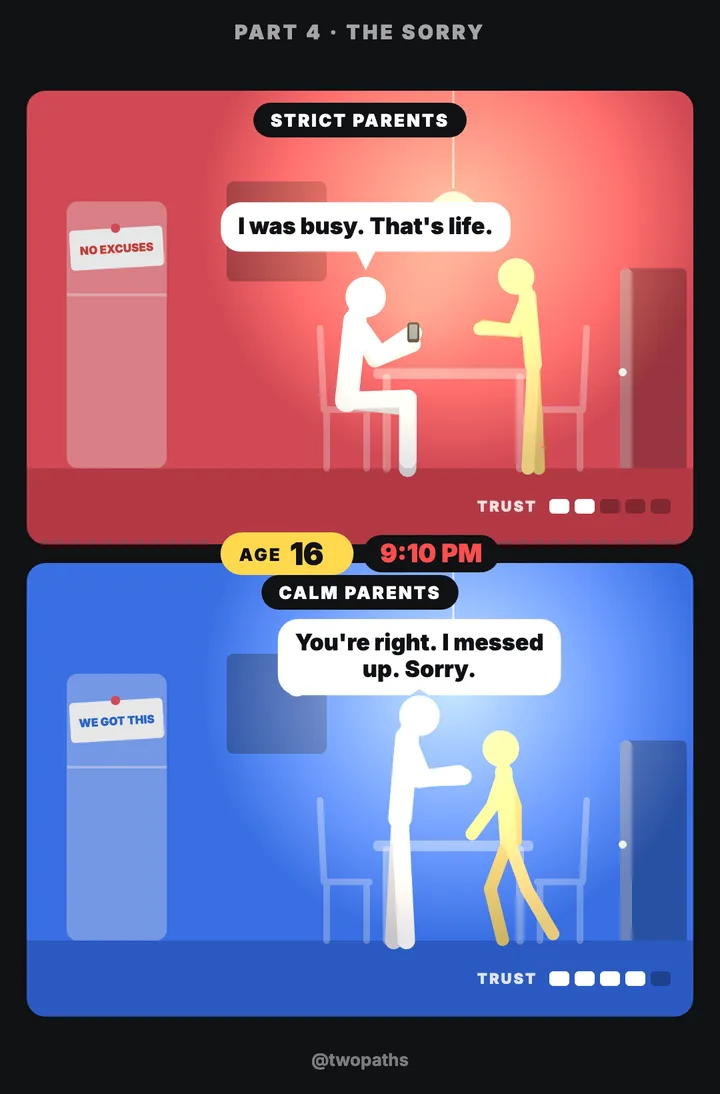
Teens can smell a scripted apology. Be direct and a little humble. "I came at you way too hard about the phone. You didn't deserve to be yelled at. I'm sorry. Can we talk about it properly?" Then actually talk, and let them push back. If they need space, give it, and say the door is open.
Adult children
If the yelling was years ago, it still counts. "I've been thinking about how I used to shout at you. I was wrong. I'm sorry. I'd like to hear what it was like for you, if you want to tell me." Don't defend your past self. Just listen.
Sorry phrases that backfire
Some apologies quietly make things worse. Watch for these:
- "I'm sorry, but…" Everything after "but" cancels the sorry.
- "I'm sorry you feel that way." This apologizes for their feelings, not your actions.
- "You made me so angry." It hands the blame back to the child. Your voice is your job.
- Over-apologizing. If you cry and need comforting, your child ends up looking after you. Keep it short and steady.
- Sorry plus a treat. Ice cream after yelling can teach that a bribe fixes things. Let the words do the work.
- Apologizing and repeating it tomorrow without trying anything new. The apology loses value fast. You don't need to be perfect, just to visibly try.
When the yelling keeps happening
One apology repairs one moment. If you are yelling most days, it helps to look at when it happens. Is it always the morning rush? Bedtime? The minute you walk in from work? Patterns are easier to change than "being a calmer person" in general.
A few ideas parents use:
- Pick a pause word. Say "pause" out loud when you feel the heat rising, and step away for a minute. Kids learn the word too.
- Lower your voice on purpose. When you want to shout, try speaking quieter. It is hard to rage in a whisper.
- Fix the trigger, not the child. If the shoes-on fight happens every morning, put the shoes by the door the night before.
- Tell your child the plan. "I'm working on not yelling. If I start, you can say 'pause'." It turns them into a teammate.
If you want to see where your habits land in other everyday moments too, our what kind of parent am I quiz guide walks through the parent titles in Two Paths and what moves them.
Practise the moment before it happens
It sounds odd, but rehearsing helps. When you have already chosen your words once, they come out faster when you need them. That is part of why we built Two Paths: you read a real moment, get two honest answers and twelve seconds to pick, then you see your path and the other path side by side.

The "As a Parent" role measures trust. Every pick moves it up or down, and your title changes with it, from The Scary One to The Safe Place. If you freeze and let the timer run out, the game takes 3 points and tells you, "Not choosing is a choice too." That one feels a lot like real parenting.
Playing with your partner or your older kids is a good conversation starter too. Our list of deep would you rather questions about life has more moments like these to talk through at dinner.
FAQ
Should parents apologize to their children?
Yes. Apologizing for how you acted does not cancel your rules. You can keep the rule and still say sorry for yelling, and your child learns how to own a mistake by watching you do it.
Does saying sorry make me lose authority?
No. Authority comes from being fair and consistent, not from never being wrong. A calm "I was wrong to yell" usually earns more respect than pretending it didn't happen.
What if my child won't accept my apology?
Give them time. Say "That's okay, I'm here when you want to talk," and don't push for a hug or an "it's fine". Then show the change in how you handle the next hard moment.
Is it too late to apologize to my adult child?
It is not too late. Name what happened, say sorry without defending yourself, and ask how it was for them. Then listen, even if the answer is hard to hear.
How many times can I apologize for the same thing?
As many times as it happens, but pair each apology with one small change you are actually trying. If nothing changes, the words start to sound empty to a child.